
THE LEADERSHIP COMPASS: DR. IBRAHIM ALMOJEL ON PURPOSE, RISK, AND BUILDING IMPACT
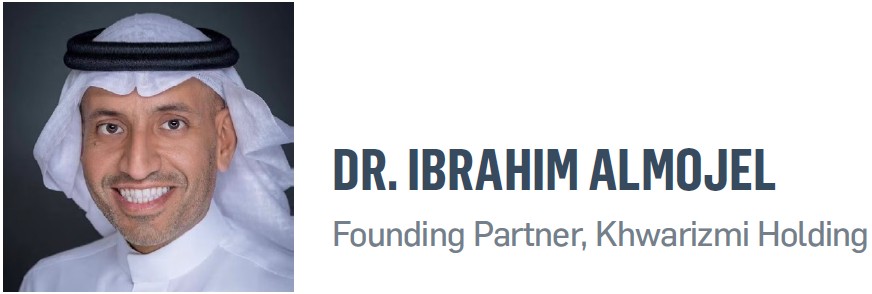
Dr. Ibrahim Almojel reflects on leadership, risk, and the importance of defining a personal “compass” in navigating careers, institutions, and economic transformation.
Prefer to read offline? Download the PDF →
Many professionals approach their careers as if they were following a carefully constructed map. They pursue defined milestones, advance through structured roles, and measure success through predictable markers of progress.
Dr. Ibrahim Almojel believes that approach often fails to account for the realities of leadership and change. Instead, he argues that the most effective leaders rely on something different: a compass.
“The terrain changes too quickly for a map to remain useful,” he says. “What matters is having a clear sense of direction.”
For Dr. Almojel, that compass has guided a career that spans corporate leadership, public sector transformation, and now private investment.
Today, he serves as founding partner of Khwarizmi Holding, an investment platform focused on venture capital, private equity, and real estate. Earlier in his career, he held senior leadership roles at Saudi Aramco and later served as CEO of the Saudi Industrial Development Fund (SIDF), where he oversaw a major institutional transformation aligned with Saudi Arabia’s Vision 2030 agenda.
DEFINING SUCCESS EARLY
The concept of a personal leadership compass emerged during Dr. Almojel’s early graduate studies at Stanford University.
Arriving later than expected due to visa delays, he began the program without the support network typically available to new students. The experience forced him to reflect deeply on the question that would shape his career decisions: how should a life be measured?
Through that reflection, he concluded that financial success was important primarily as a means of creating freedom and security for his family. Beyond that threshold, he believed the greater priority should be impact.
That framework would later influence several pivotal decisions, including leaving a successful corporate career at Saudi Aramco to join government leadership roles during the early stages of Vision 2030.
“It gave me a way to evaluate trade-offs,” he explains. “Once you know what you are optimizing for, decisions become much clearer.”
LEADERSHIP SHAPED BY FAMILY
Dr. Almojel’s leadership philosophy was also shaped by the example set by his parents.
His mother was among the first women in Saudi Arabia to pursue advanced quantitative education, eventually becoming a university professor and academic leader. Her commitment to education and mentorship demonstrated the long-term influence that individual leaders can have on others.
From his father, he absorbed a different lesson: the importance of building things that endure. Dr. Almojel recalls visiting development projects his father had invested in and observing the pride he took not only in their financial success but in the tangible contribution they made to the surrounding community.
The combination of those two influences—impact and creation—continues to shape how he thinks about leadership and investment today.
LISTENING AS A DISCIPLINE
Another principle Dr. Almojel emphasizes is the importance of listening.
Leadership roles often create an expectation of certainty, but he believes effective leaders must remain open to new perspectives and willing to adjust their thinking.
One simple test, he suggests, is whether a leader has changed their mind about something significant within the past six months.
“If you never change your mind, you’re probably not listening,” he says.
For organizations navigating complex transformations, the ability to absorb new information and adapt quickly can be as important as strategic clarity.
REFRAMING FAILURE
Looking back on his career, Dr. Almojel says one lesson he would apply earlier is a greater willingness to take risks.
He often recalls an exercise assigned by a professor during graduate school in which students were asked to write a “resume of failures,” documenting opportunities they pursued but did not achieve.
The purpose of the exercise was to normalize failure as part of professional growth.
When leaders recognize that setbacks are inevitable, he argues, they are more likely to pursue opportunities that might otherwise appear too risky.
“Once you have a long resume of failures, adding one more doesn’t feel so daunting,” he says.
GUIDANCE FOR THE NEXT GENERATION
For young professionals entering leadership roles in Saudi Arabia’s rapidly evolving economy, Dr. Almojel believes the most important step is defining success on their own terms.
Without that clarity, individuals often find themselves pursuing goals shaped by external expectations rather than personal priorities.
“Otherwise,” he says, “you may wake up one day and realize you’ve been following someone else’s definition of success.”
A clear compass does not guarantee a predictable path. But it does ensure that when opportunities and challenges arise, leaders have a consistent framework for deciding which direction to take.
Dr. Ibrahim Almojel is the founding partner of Khwarizmi Holding, an investment platform focused on venture capital, private equity, and real estate. He previously served as Chief Executive Officer of the Saudi Industrial Development Fund (SIDF), where he led a significant transformation of the institution to align with Saudi Arabia’s Vision 2030 agenda, expanding its mandate into sectors such as logistics, mining, and renewable energy while increasing the fund’s capital base.
Earlier in his career, Dr. Almojel held several leadership roles at Saudi Aramco, including CEO of Wisayah, the investment management arm of Aramco captive fund.
Dr. Almojel currently serves on the boards of the Saudi National Bank (SNB), Hassana Investment Company, and Saudi EXIM Bank. He also serves as a member of the Executive Committee and the Investment Committee at Saudi Telecom Company (STC) and a member of the Executive Committee at NEOM. He also serves on additional boards and committees beyond those currently listed.
He holds a BS in Electrical Engineering and Mathematics from Vanderbilt University and MS and PhD degrees in Management Science and Engineering from Stanford University.
The Authors
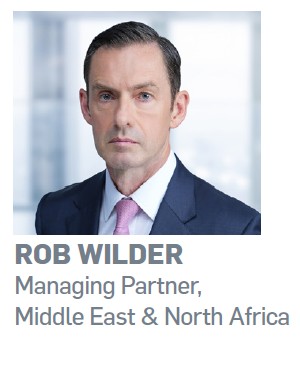
Rob Wilder is the managing partner of Caldwell’s Dubai office, leads the firm’s operations across the Middle East & North Africa, and is a key member of the Financial Services, FinTech, and Private Equity practices. With over 25 years of experience advising organizations on board and executive succession, leadership assessment and development, and executive search, Rob has a proven track record of helping clients build high-performing leadership teams. Since 2007, Rob has been deeply connected with the Middle East, and is recognized for his ability to attract and integrate world-class local and international talent into pivotal leadership roles.
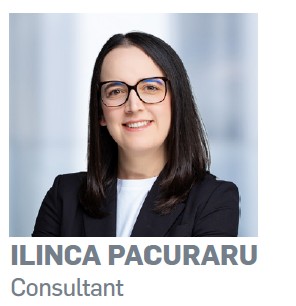
Ilinca Pacuraru is a consultant in Caldwell’s Dubai office with a specialized focus on CEO, Board, C-suite, and senior leadership placements across the GCC, Middle East, and Africa. With over 15 years of regional expertise, she designs and executes full-cycle search mandates for sovereign wealth funds, family offices, and multinational corporations. Her core sectors include healthcare, retail and consumer, financial services and fintech, and industrial operations, where she consistently secures transformative leaders to drive strategic growth, operational resilience, and global market positioning.