
Leadership at the Intersection of Capital, Culture, and Industry Creation: Brian Ward on Building Savvy Games Group
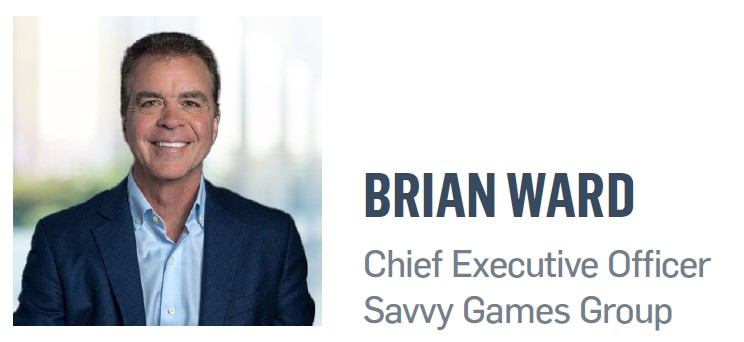
How Savvy Games Group is building a gaming and esports company while helping share a new technology ecosystem under Saudi Arabia’s Vision 2030 transformation.
Prefer to read offline? Download the PDF →
The global gaming industry is undergoing rapid structural change, driven by the rise of mobile platforms, new monetization models, and expanding global audiences. At the same time, governments and sovereign investors are increasingly seeking to build technology and entertainment ecosystems as part of broader economic transformation strategies.
Few executives sit at the intersection of these forces as directly as Brian Ward.
As CEO of Savvy Games Group, Ward is leading one of the most ambitious initiatives in the global gaming sector: the creation of a company designed to become the world’s largest gaming and esports organization. Backed by Saudi Arabia’s Public Investment Fund (PIF), Savvy forms part of the Kingdom’s Vision 2030 strategy to build globally competitive industries beyond oil.
Ward’s career has long placed him at the forefront of gaming’s evolution. Over nearly three decades, he has held senior leadership roles at Electronic Arts, Microsoft’s Xbox division, and Activision Blizzard, overseeing some of the industry’s most successful studios and franchises.
Yet the challenge he faces today differs fundamentally from scaling an established company. At Savvy, the task is not only to build a successful enterprise but also to help shape an industry ecosystem within a rapidly transforming national economy.
In our industry, I don’t think there are opportunities like this anywhere else in the world right now.
RECOGNIZING A ONCE-IN-A-GENERATION OPPORTUNITY
Ward’s decision to join Savvy in 2021 was driven less by the gaming sector itself than by the scale of the opportunity presented by Saudi Arabia’s broader transformation agenda.
“When I first came to Riyadh and saw the impact of Vision 2030 up close, it became clear this was something different,” he explains.
The Kingdom’s ambition to build a global gaming and esports hub is supported by substantial long-term capital and policy alignment across government institutions. For Ward, that combination creates an environment where industry creation can occur at a pace rarely seen elsewhere.
In many ways, the task resembles the development of earlier technology clusters, where government support, private capital, and entrepreneurial talent converged to build entirely new sectors.
LEADING INSIDE A COMPLEX STAKEHOLDER ECOSYSTEM
Operating within that environment, however, requires a leadership approach that differs from the norms of the global technology sector.
The gaming industry traditionally operates with flat organizational structures and extremely rapid development cycles. Decisions are often decentralized, and creative teams require significant autonomy.
Saudi Arabia’s broader institutional environment, by contrast, is characterized by a more hierarchical structure and a wider set of stakeholders involved in major decisions.
Ward notes that navigating this dynamic has been one of the most significant leadership adjustments required since arriving in the region.
“You have to recalibrate how you operate,” he says, particularly when balancing the speed required in a technology-driven industry with the alignment required within a sovereign-backed investment ecosystem.
For leaders accustomed to Silicon Valley-style operating environments, this balance can represent a substantial shift.
SCALING THROUGH A FEDERATED MODEL
Savvy’s strategy for growth reflects both the structure of the gaming industry and the realities of building a new global organization.
Rather than integrating acquisitions into a centralized structure, the company has adopted a federated operating model in which individual businesses retain a high degree of independence while benefiting from the capital and strategic direction of the parent organization.
Ward first encountered this model during his time at Activision, where it proved particularly effective in creative industries that rely heavily on studio culture and entrepreneurial autonomy.
At Savvy, the model has also served another purpose: enabling the company to acquire and scale mature businesses even while the parent organization itself was still in its early stages.
The result is a structure designed to accommodate a diverse portfolio of gaming and esports assets while maintaining flexibility as the company continues to grow.
BUILDING INDUSTRIES, NOT JUST COMPANIES
Savvy’s mandate extends beyond corporate growth. The company is also expected to contribute to the development of a broader gaming ecosystem within Saudi Arabia.
That includes initiatives such as educational partnerships, talent development programs, and efforts to attract international companies to establish operations in the Kingdom.
Interest among local talent has already proven significant. Ward notes that when one of Savvy’s studios posted several open roles, hundreds of applications were received within the first day, including many Saudi professionals working abroad who were eager to return home to participate in the industry’s growth.
The challenge now is ensuring that the ecosystem evolves quickly enough to create meaningful career opportunities for the next generation of talent.
LESSONS FOR GLOBAL LEADERS
For executives considering opportunities in Saudi Arabia or the broader Gulf region, Ward emphasizes that success depends less on technical expertise than on mindset. The region’s business culture places a strong emphasis on long-term relationships, alignment with national priorities, and sustained engagement.
“If you come here thinking it’s a place to make money for two years and leave, people will see through that quickly,” he says.
For leaders prepared to invest the time to understand the context and build lasting relationships, however, Ward believes the opportunities are extraordinary.
“In our industry, I don’t think there are opportunities like this anywhere else in the world right now.”
Brian Ward is Chief Executive Officer of Savvy Games Group, a global gaming and esports company backed by Saudi Arabia’s Public Investment Fund. Since becoming founding CEO in 2021, he has led Savvy’s rapid expansion into one of the world’s largest esports organizations and a top global games publisher, with nearly 4,000 employees across more than 20 countries.
Ward brings nearly three decades of experience across the gaming and technology industries. Prior to Savvy, he held senior leadership roles at Electronic Arts, Microsoft’s Xbox division, and Activision Blizzard, where he served as Senior Vice President of Worldwide Studios and oversaw a period of significant growth and acquisition driven expansion.
Earlier in his career, Ward practiced law before transitioning into the games industry. He later founded Lotto Interactive, a developer of mobile games for lottery and gaming operators. Ward holds business and law degrees from the University of Alberta.
The Authors
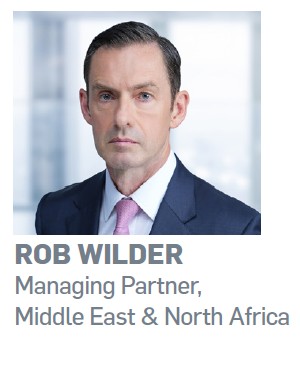
Rob Wilder is the managing partner of Caldwell’s Dubai office, leads the firm’s operations across the Middle East & North Africa, and is a key member of the Financial Services, FinTech, and Private Equity practices. With over 25 years of experience advising organizations on board and executive succession, leadership assessment and development, and executive search, Rob has a proven track record of helping clients build high-performing leadership teams. Since 2007, Rob has been deeply connected with the Middle East, and is recognized for his ability to attract and integrate world-class local and international talent into pivotal leadership roles.
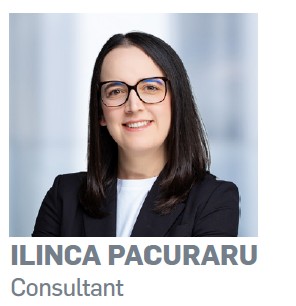
Ilinca Pacuraru is a consultant in Caldwell’s Dubai office with a specialized focus on CEO, Board, C-suite, and senior leadership placements across the GCC, Middle East, and Africa. With over 15 years of regional expertise, she designs and executes full-cycle search mandates for sovereign wealth funds, family offices, and multinational corporations. Her core sectors include healthcare, retail and consumer, financial services and fintech, and industrial operations, where she consistently secures transformative leaders to drive strategic growth, operational resilience, and global market positioning.